The Day I Realized I Was Safe
For a long time, I thought safety came from being prepared for everything. If I could read the room, anticipate the problem, keep everyone happy, and stay one step ahead, then maybe I could keep things from going wrong. It looked like capability from the outside, and in many ways it was. But there is a difference between being capable and believing that everything depends on your ability to keep control.
I spent fifteen years performing professionally, and somewhere along the way I also became very good at performing the roles life handed me. I learned discipline, awareness, timing, and how to become what the room needed. Those skills gave me a lot, but they also helped reinforce an idea I eventually had to question: that confidence comes from getting things right.
It does not.
Confidence comes from knowing that when something does go wrong, you can meet it.
That realization changed how I understood empowerment. I have come to think of empowerment as enduring adversity until you realize you are safe. Not because adversity is something we should seek out, and certainly not because anyone should remain in a harmful situation to prove how strong they are. I mean that when we move through difficult moments with skills, boundaries, awareness, support, and self-trust, we begin collecting evidence that we can handle more than we once believed.
Safety stops being only something we hope the world gives us.
It becomes something we know how to participate in creating.
I Used to Think Confidence Came First
We often tell ourselves we will act once we feel confident. We will have the difficult conversation when we feel ready. We will set the boundary when we stop feeling guilty. We will try the class, ask for help, change the pattern, or say what we really think once the fear has disappeared.
But much of my life has taught me the opposite.
Confidence often comes after the action.
You practice something you do not know how to do yet. You get it wrong. You learn. You return. Eventually, you have evidence that you can do something today that you could not do before.
That matters because real confidence needs something stronger than reassurance. It needs proof.
This is one of the ideas at the center of my work. I believe capability can be built in your body, in yourself, in your children, and in your home. Confidence is not the reward for getting everything right. It grows when you discover that you can respond when things do not go according to plan. CORE ANCHOR & IDEAL CLIENT
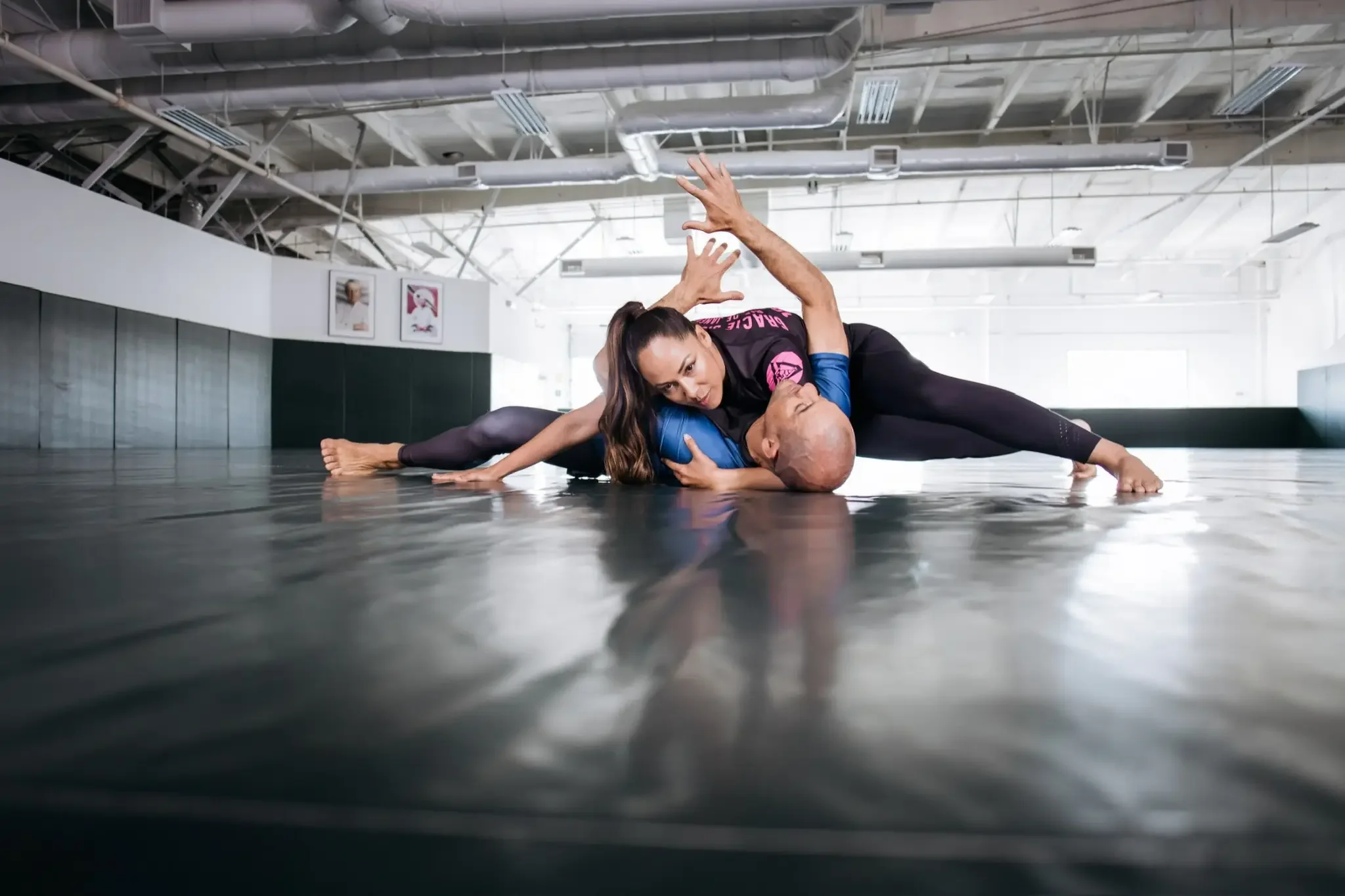
The jiu-jitsu mat made this especially clear for me. On the mat, you cannot fake capability for very long. Either you understand the movement yet or you do not. Either you practiced enough or you need more practice. There is nothing shameful about either answer. You simply get information, make an adjustment, and try again.
That relationship with failure changed something in me.
Failure became information instead of identity.
And that lesson reaches far beyond jiu-jitsu.
Safety Is Not the Absence of Fear
Feeling safe does not mean never being afraid.
Fear can be useful. It can tell us to pay attention. It can tell us that we have entered unfamiliar territory. Sometimes it tells us a boundary is being crossed, and sometimes it simply tells us that what we are doing matters.
The goal is not to become a woman who never experiences fear. The goal is to become a woman who has enough capability that fear does not have to make every decision.
That distinction is part of what I teach through Women Empowered. As one of the head instructors of the program at Gracie University, my work includes physical self-defense, but it also includes verbal skills, boundary building, and helping women develop the confidence to protect themselves and their families. At the center of that work is a simple idea: you are worth defending. VIC GRACIE COPY
For me, those words have never belonged only to physical confrontation.
You are worth defending, which can mean speaking when something feels wrong. It can mean paying attention to your instincts instead of immediately talking yourself out of them. It can mean changing your mind. It can mean asking someone to stop. It can mean leaving. It can mean asking for help before a situation reaches a breaking point.
Self-defense is partly about physical skill, but it is also about agency.
The more options you know you have, the less powerless you feel.
Instead of asking only, "What if something happens to me?" you begin to understand that another question exists: "What can I do if something happens?"
There is power in that question because it puts you back inside your own life.
When Being Capable Starts Costing Too Much
There is another kind of performance that many women know well.
You become the person who remembers everything. You know where everyone needs to be. You anticipate the problem before anybody else notices it. You manage the appointments, emotions, deadlines, plans, meals, messages, and invisible details that keep a family or a life moving.
And because you are good at it, people may assume you are fine.
You may assume you are fine too.
This is where capability can turn into overfunctioning. It can hide beautifully inside responsibility because so much of what you are doing is genuinely useful and often genuinely loving.
But being able to carry something does not automatically mean you should be carrying it forever.
The woman my work speaks to is often the woman everybody already thinks is capable. From the outside, her life looks handled because she is handling it. What people do not see is how exhausting it can become to manage a life instead of feeling present inside it. CORE ANCHOR & IDEAL CLIENT
I know that pattern because I have lived parts of it myself. Professional performing taught me how to become what a room required, and motherhood came dangerously close to turning that ability into a permanent way of living. What began changing things was realizing that capability did not have to mean carrying everything alone. CORE ANCHOR & IDEAL CLIENT
Sometimes strength is taking responsibility.
Sometimes strength is realizing which responsibilities were never yours.
Those are not the same skill.
Boundaries Helped Me Understand Self-Trust
For years, I thought boundaries were mainly about controlling how other people interacted with me.
Eventually, I understood that a boundary is also a promise you make to yourself.
It asks, when something does not feel right, will I listen?
Will I say no even when yes would be easier for everyone else?
Will I ask for time instead of giving an immediate answer?
Will I allow someone to be disappointed without automatically assuming their disappointment means I did something wrong?
Will I recognize when I am helping because I want to and when I am helping because I am afraid of what will happen if I stop?
Those questions are not always comfortable, especially when competence has become part of your identity.
When you are used to being useful, asking someone else to help can feel inefficient. Setting a limit can feel selfish. Saying no can feel harsher than quietly absorbing the inconvenience yourself.
But every healthy boundary gives you another piece of evidence.
It says, "I am paying attention to myself."
That is how boundaries and safety became connected for me.
Safety is not merely knowing someone else will respect my limits. It is also knowing that I will respect them.
Motherhood Made the Lesson Impossible to Ignore
Motherhood changed this conversation because children watch what we practice.
I can tell my daughters that they are allowed to use their voices, but they will also notice whether I use mine. I can teach them that mistakes are part of learning, but they will see how I speak to myself when I fail. I can tell them they deserve healthy boundaries while showing them, through my own choices, whether I believe the same thing about myself.
That is humbling.
My approach to parenting and personal growth has long been rooted in the belief that helping children reach their potential also requires parents to nurture who they themselves are becoming. VIC GRACIE COPY
I do not want my children to believe strength means never needing anything.
I do not want them to believe being dependable requires self-abandonment.
And I do not want them to believe a good mother, partner, friend, daughter, or woman is simply the person who can tolerate the most.
I want them to understand capability differently.
Capability means learning.
It means practicing.
It means having boundaries.
It means asking for help.
It means being able to experience failure without turning that failure into a definition of yourself.
Most importantly, it means knowing that you can remain connected to yourself even when life becomes difficult.
That is the safety I want to model.
The Day I Realized I Was Safe Was Really a Collection of Days
The title of this essay suggests there was one perfect moment when everything changed.
My experience has been quieter than that.
Safety became visible through evidence.
A skill practiced enough times that it became familiar. A boundary held. A mistake survived. A difficult situation that taught me something instead of proving something terrible about me. An opportunity to let another person carry their share instead of automatically stepping in.
Those moments build on each other.
Eventually, the story changes from "I need everything to go right" to "I trust myself to respond when something goes wrong."
That is a very different way to live.
It also changed the way I understood control.
Control can look like safety because it tries to remove uncertainty. If I anticipate enough, plan enough, and manage enough, maybe nothing can surprise me.
But life does not work that way.
Children change. Relationships change. Careers change. Bodies change. Plans fail. People misunderstand us. We misunderstand ourselves. Sometimes we make the wrong choice with the information we have.
If safety requires perfect control, none of us will ever actually feel safe.
Capability offers another way.
Instead of demanding certainty, capability asks, "Do I trust myself to meet what comes next?"
That is the heart of enduring adversity until you realize you are safe.
It does not promise that life will never hurt.
It does not ask you to accept treatment that harms you.
It says that your experience can become evidence. You can learn skills. You can develop discernment. You can build relationships that support you. You can learn when to stay, when to speak, when to ask for help, and when to walk away.
You become less dependent on the fantasy that nothing difficult will happen because you have built a relationship with yourself that can continue through difficulty.
Becoming Safe Does Not Mean Becoming Completely Independent
There is one more idea I think we need to challenge.
Empowerment is sometimes mistaken for total independence.
"I can do everything myself."
That sounds strong until doing everything yourself becomes another cage.
One of the biggest lessons in my own brand and life has been that families become stronger when capability is shared. I learned that the performance of carrying everything was costing more than it protected, and that letting go of some of that weight did not make my family weaker. CORE ANCHOR & IDEAL CLIENT
Real safety includes knowing you have people.
It includes knowing how to ask.
It includes letting children develop age appropriate capability instead of solving everything before they get the chance.
It includes allowing other adults to contribute without correcting every detail because they did it differently.
Community is not the opposite of empowerment.
Sometimes community is what empowerment looks like.
A safe woman does not have to prove that she needs nobody. She learns that receiving support does not erase her strength.
What Does Becoming Safe Look Like in Everyday Life?
It is usually much less dramatic than we imagine.
Maybe you pause before automatically saying yes.
Maybe you finally ask someone else to handle something they are capable of handling.
Maybe you begin a physical practice that helps you experience your own strength differently.
Maybe you have a conversation you have avoided because you were afraid of disappointing someone.
Maybe you let yourself be a beginner.
Maybe you make a mistake, gather the information, repair what needs repairing, and refuse to spend the next three days punishing yourself for being human.
None of those actions looks revolutionary on its own.
But they create evidence.
And evidence creates trust.
My approach has always been to live these lessons first and teach them second. The stage, the jiu jitsu mat, marriage, motherhood, and everyday life have all been places where capability had to be practiced before it could become confidence. CORE ANCHOR & IDEAL CLIENT
Maybe that is the part of safety we miss when we treat it only as a feeling.
Sometimes you do not feel safe first.
Sometimes you practice the skills that eventually allow safety to become believable.
Frequently Asked Questions About Safety and Empowerment
What does "enduring adversity until you realize you are safe" mean?
For me, enduring adversity until you realize you are safe means developing enough capability, self trust, awareness, boundaries, and support that difficult experiences no longer automatically make you feel powerless. It does not mean staying in harmful situations. The point is not enduring harm. The point is realizing, through lived experience, that you have choices and can respond when life becomes difficult.
Can you feel safe and still experience fear?
Yes. Safety does not require fear to disappear. Fear can provide useful information about risk, uncertainty, boundaries, or unfamiliar experiences. Becoming more capable gives you more ways to respond to that information instead of allowing fear to control the entire decision.
How do boundaries help build self trust?
Healthy boundaries give you evidence that you will listen to yourself. Every time you communicate a limit, say no when you mean no, ask for space, or stop automatically prioritizing someone else's comfort over your own needs, you strengthen the relationship you have with yourself.
Does self defense help build confidence?
Self defense can build confidence because it gives you physical skills and opportunities to practice responding under pressure. In Women Empowered, the work also includes verbal skills, safe boundary building, and developing the mindset that you are worth defending. VIC GRACIE COPY Confidence grows when preparation creates real evidence of what you can do.
Is asking for help a sign that I am not capable?
No. Capability does not mean doing everything alone. Knowing when you need support, sharing responsibility, and allowing the people around you to develop their own capability can create stronger families and healthier relationships. Being able to carry everything is not the same as being required to carry everything.
How can parents model confidence and safety for their children?
Children learn from what they repeatedly experience. They notice whether adults use healthy boundaries, repair mistakes, ask for help, try new skills, and speak to themselves with respect. Modeling capability does not mean pretending to be fearless or perfect. It means allowing children to see what learning, repair, and self trust look like in real life.
You Are Worth Defending
I used to think being safe meant getting good enough at life that I could prevent everything from going wrong.
Now I think it means something very different.
It means knowing I have a voice when something feels wrong. Knowing I can ask for help. Knowing I can learn skills I do not have yet. Knowing I can disappoint someone and still remain connected to myself. Knowing I can fail without believing I am a failure.
Safety is not the promise that life will always cooperate.
It is the growing belief that you can meet your own life.
That belief is not built in one grand moment. It is built every time you practice, learn, speak, repair, set a boundary, accept support, and discover that you are still here.
Eventually, you stop waiting for the world to prove that you are safe.
You begin carrying some of that proof within you.
And that may be the deepest meaning of empowerment I know.
You are worth defending.