I was never
the best.

People tend to assume that because I spent 20 years working professionally as a dancer, booking tours, films, television, and some very big stages, I must have been one of the best dancers in the room.
I wasn’t.
There were always dancers with better feet, higher jumps, cleaner extensions, better musicality. What I learned instead was how to control the things I could. I learned choreography quickly. I took notes. I showed up early, stayed late, listened, helped, adapted when everything changed at the last minute, and tried very hard to become someone people could trust.
I wasn’t always the flashiest dancer. I became the one they could bank on.
Eventually I gave that philosophy a name: WAAR.
Work ethic. Adaptability. Attitude. Reliability.
Talent can open a door, but you cannot control who walks into the room more talented than you. You can control how prepared you are, how you treat people, how quickly you pivot, and whether people want to work with you again.
Preparation became one of the most controllable forms of confidence I knew.
Funny enough, I think I had been learning that lesson long before I ever stepped into an audition.

The first thing i
remember
building was
a computer
I was in middle school when I asked my parents for one. My stepdad worked at JPL for NASA, and instead of buying me the computer I desperately wanted, he handed me three dictionary-sized books about how computers worked and told me to come back when I had read them.
There was an audible thud. I’m sure of it.
But I wanted what my friends had, so I read every page. When I came back, he gave me a budget, drove me to Fry’s Electronics, and said, “You want a computer, you build it.”
We walked the aisles figuring out memory, RAM, motherboards, spacing, all the pieces that had been completely foreign to me weeks earlier. Then he gave me his time and patience while I put it together.
When that computer finally booted up, I remember sitting there with what felt like the whole world at my fingertips and realizing I could learn almost anything if I had the time and the resources.
Naturally, I then used this technological achievement almost exclusively for AOL Instant Messenger.
I was twelve. I really just wanted my friends.
Looking back, I understand that my stepdad wasn’t teaching me how to build a computer. He was teaching me what it felt like to become capable.
That lesson has followed me everywhere.
I spent a lot of years wanting to belong.
Growing up, one of the biggest holes in my heart was belonging. I don’t know exactly how that feeling gets built in most people, but I struggled to feel it. Some days, I probably still do.
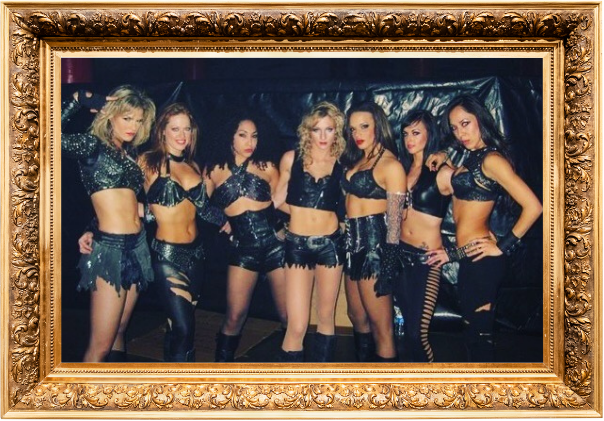
For me, it looked like FOMO to the max. If I wasn’t there, I might miss the memory, the closeness, the joke everyone would talk about tomorrow. So I spent years chasing rooms. Audition rooms, stages, cities, casts of people who could become family incredibly quickly and then scatter again when the job ended.
There is something strange about professional dance friendships. Dancers are often deeply expressive, vulnerable people, so you can go deep and fast with someone while simultaneously standing beside them in a room where you both desperately want the same job.
I learned a lot about competition in those rooms. Eventually, I learned something about community too.
I would rather choose people than compete for them.
These days, I am much more interested in creating the gathering than being afraid I missed one. I host. I feed people. I make the charcuterie board. I put the nuts in their own bowl because someone I love has an allergy. I grab mint or rosemary from the garden and try to make the table feel like there is room for everybody.
Community does not just happen overnight. You build it, moment by moment.
I used to be afraid of missing the gathering. Maybe I was supposed to be the one creating it.
For a long time, my body was part of the job.
A professional dance career is a strange place to learn confidence.
You can get a call from your agent saying you have been personally requested for an audition, spend an unreasonable amount of time overthinking your outfit, drive in circles looking for nonexistent parking, hike several blocks in heels, and finally walk into a room filled with some of the most beautiful, talented people you know.
Then the comparison begins.
You learn the choreography. They make the cuts. Some days you are too tall, too small, too thin, too big, too brunette, too something. Eventually I realized the industry was looking for someone to fit a particular mold, and I did not have to turn every “no” into a story about what was wrong with me.
I did not have to change who I was. I had to understand the game.
That may have been the slowest love story of my life, finding some peace with myself.
I also learned that, professionally, my body was a storytelling tool. Most dancers are not the star. We are behind the artist, beside the actor, moving through the frame, helping someone else’s vision come alive. I have joked that we are very talented moving wallpaper.
There is humility in that. There is also something complicated about spending years having your body watched, judged, directed, and used as part of the work.
You can be watched by a lot of people and still be learning what it means to feel truly seen.
Then jiu-jitsu changed what my body was for.
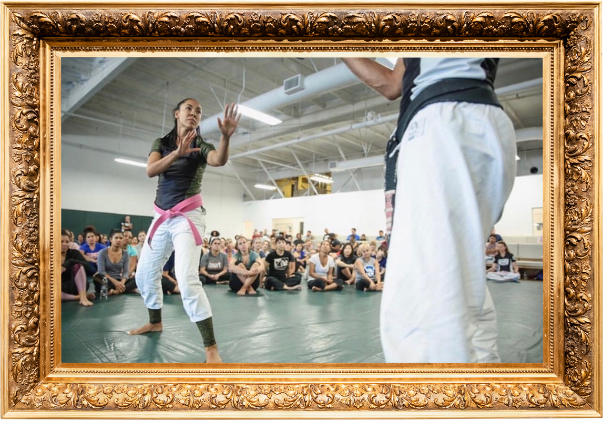
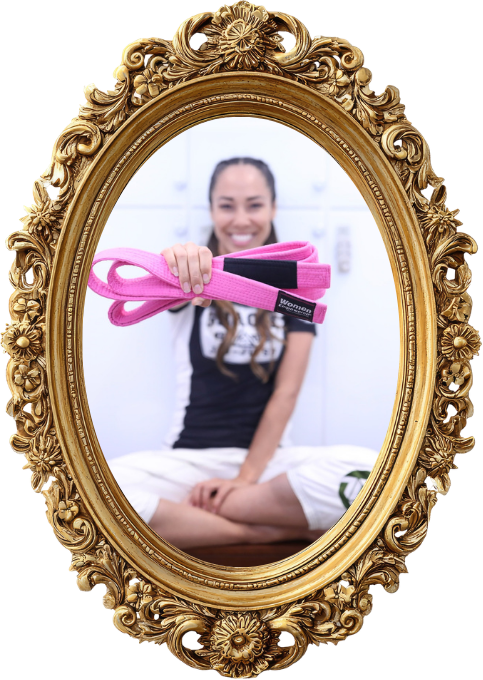
Love introduced me to jiu-jitsu, but what I found on the mat became deeply personal.
Dance had taught me control, timing, movement, discipline, and awareness. Jiu-jitsu took those same things and gave them an entirely different purpose.
For the first time, I was learning how my body could protect me.
How it could create space. How it could hold a boundary. How it could stay calm enough to find an answer when something felt difficult or uncomfortable.
Dance taught me to move for an audience. Jiu-jitsu taught me to move for my life.
That shift changed something in me.
My body wasn’t only for performing. It was for protecting. For feeling. For living in.
Now, through my work teaching women self-defense, I get to watch other women discover pieces of that same feeling. One of my favorite parts of teaching is watching someone begin unsure, maybe even convinced she cannot do the thing in front of her, then slowly realize that she can.
One move at a time, the mystery becomes something she knows how to handle.
Teaching self-defense is often just reminding women how capable they already are.
You are worth defending.
Then I became a mother, and capability meant something different.
My daughters have taught me more about control, surrender, regulation, repair, and trying again than almost anything else in my life.
I homeschooled them through different seasons of their childhood. We baked and called it math. Chickens and bunnies became biology. Art found its way into everything we could get our hands on. I had the privilege of being there for so many of those tiny “aha” moments when frustration suddenly became understanding.
There were magical days.
There were also days of tears, unmet expectations, disorganization, and feeling like I had absolutely failed. Often those tears were mine.
But over time, I realized my job was not to remove every struggle from my children’s lives. My job was to create enough opportunities for them to struggle safely, stay with something, and eventually experience themselves becoming capable.
The greatest gift isn’t giving someone the answer. It’s showing them they are capable of finding it.
That philosophy eventually found its way into the books I wrote, into the way I teach, and into the way I try to parent. Sometimes it means helping a child find her voice. Sometimes it means practicing a polite “no” before she ever needs a much bigger one. Sometimes it means staying curious about her experience instead of handing her all the old stories from mine.
And sometimes it means climbing a giant hill of sand together.
We climb the sandhill every week.
The hill looks pretty terrible from the bottom.
We climb it anyway.
I love doing hard physical things with my family because the lesson becomes something they can feel instead of something I have to lecture about. Things that look impossible from the bottom have a funny way of changing once you are standing at the top.
That is what I want my daughters to collect: evidence.
Evidence that they can struggle. Evidence that they can learn. Evidence that they can keep going. Evidence that being uncomfortable does not mean being incapable.
Confidence isn’t built by believing in yourself. It is built by watching yourself do hard things repeatedly.
And I think children borrow our nervous systems before they build their own, which means a lot of the work of raising them keeps bringing me back to the work of raising myself.
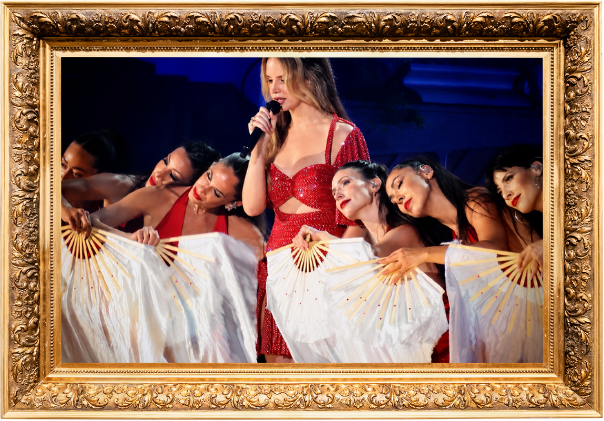
I thought one version of me was finished.
Then I got a phone call.
I was deep into motherhood when the opportunity came to go back on tour with Lana Del Rey. I cried, I screamed, and then I cried again.
You think you are done. You think, I’m too old.
Then an offer comes and you think, holy smokes, what if?
So I went.
For three years, from spring through fall, I returned to rehearsals, choreography, training, traveling, performing, and the very specific mental and physical work required to keep a body doing that job.
My husband handled home while I was gone. My daughters missed me, and I missed them deeply. But they also got something that surprised me.
They got to see me be something outside of mother.
They had not been alive for most of my career, so they had never seen everything behind the finished performance. They saw the training. The fueling. The focus. The piles of choreography. The discipline. The workplace relationships. The juggling required to love your family deeply and still answer the call of something that belongs to you.
My life wasn’t over after 40.
That mattered to me.
I think it mattered to them too.
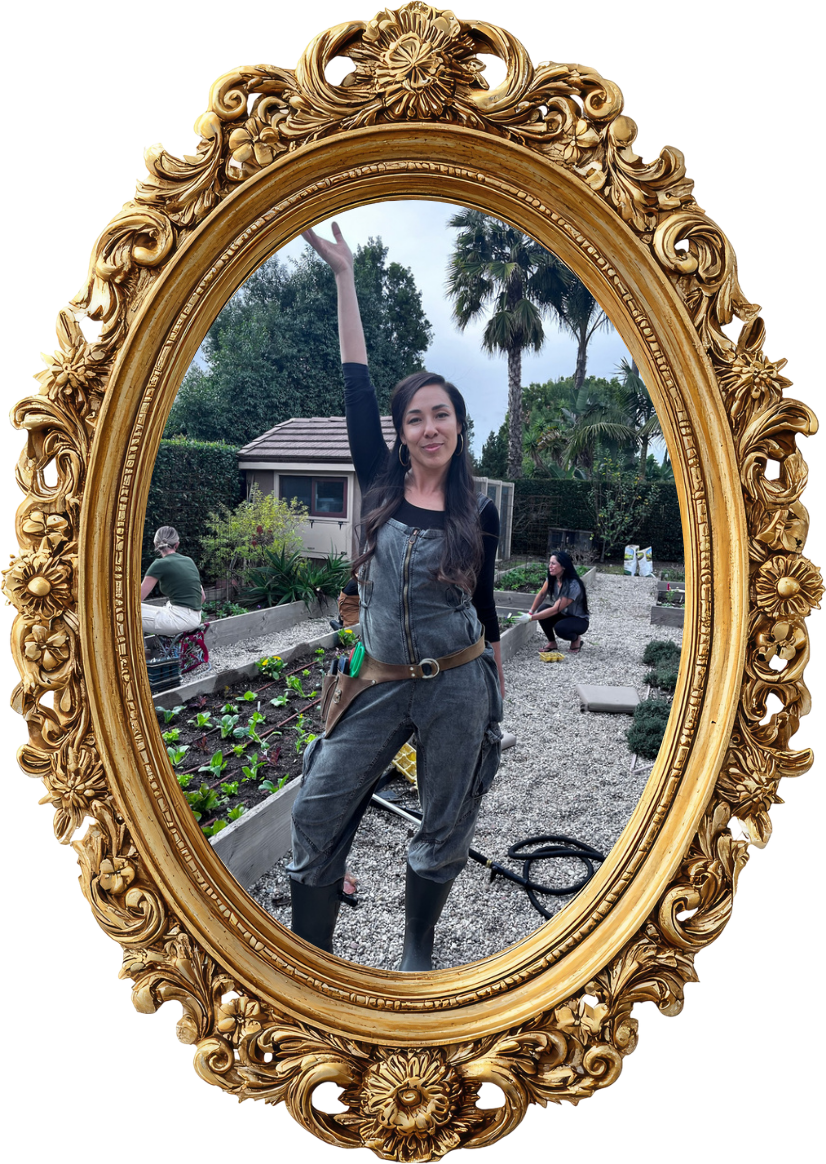
These days, the garden keeps reminding me that i control nothing.
I am a person who likes preparation. Systems. Plans. Controlling the controllables.
Life has been very committed to teaching me the limits of that philosophy.
I have experienced grief that changed me permanently. Losing a parent creates a layer of pain that is difficult to explain until you know it. Strangely, it has also connected me to people. There is an invisible understanding between people carrying certain losses.
The deeper the love, the longer the echo.
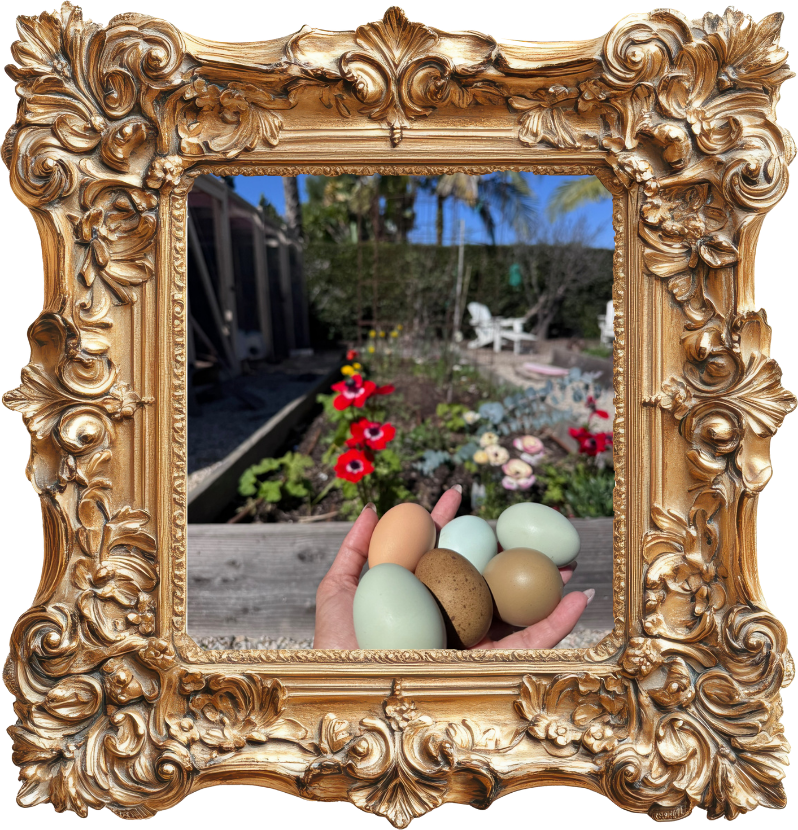
And then there is the garden, quietly teaching the same lessons in less devastating ways.
Some plants thrive. Others struggle because they are in the wrong place. Some need more light, water, or nourishment. Volunteer seeds blow into a bed where nobody intended them to grow and somehow flourish anyway.
Every season offers a different lesson about timing, beauty, nourishment, belonging, and knowing when something simply needs different soil.
Some seasons are for blooming. Others are for rooting. Both are growth.
I have spent a lot of my life learning how to build things. A computer. A career. Skills. A family. A garden. A table people want to gather around. A sense of safety in my own body. A life that feels increasingly like mine.
And the funny thing is, the more capable I become, the less interested I am in pretending I have all of it figured out.
I believe in doing the work. I believe in boundaries. I believe in clear conversations, trying again with compassion, and choosing people who make the people around them feel safer, not smaller.
I also believe I control almost nothing.
Both things can be true.
Still willing to fail, a few more times.
If there is one thread through all of it, I think it is this: capability can be built.
In ourselves. In our children. In our bodies. In our homes. In the people we teach and the communities we create.
I’m still building mine.
I’m glad you found your way here.