I spent fifteen years traveling the world as a professional dancer. Different cities, different stages, different people. Back then, movement was something I did for an audience. Today, jiu-jitsu has given movement an entirely different meaning.
It has become part of how I think about confidence, family, and what it means to feel capable in my own body.
And when travel enters the picture, I don't believe all of that has to stay home.
Training BJJ while traveling is about finding a welcoming academy, understanding its rules, and making room for training without losing the joy of the trip. Sometimes that means finding a class in another country. Other times, it means deciding that the best thing you can do is rest.
As a mother of two daughters, a self-defense instructor, and a woman who has spent a good portion of her life moving between places, I've learned that preparation and flexibility belong together.
Here's how I approach the idea of finding jiu-jitsu on the road, whether you're traveling alone, with a partner, or with your entire family.
How to Find BJJ Training While Traveling
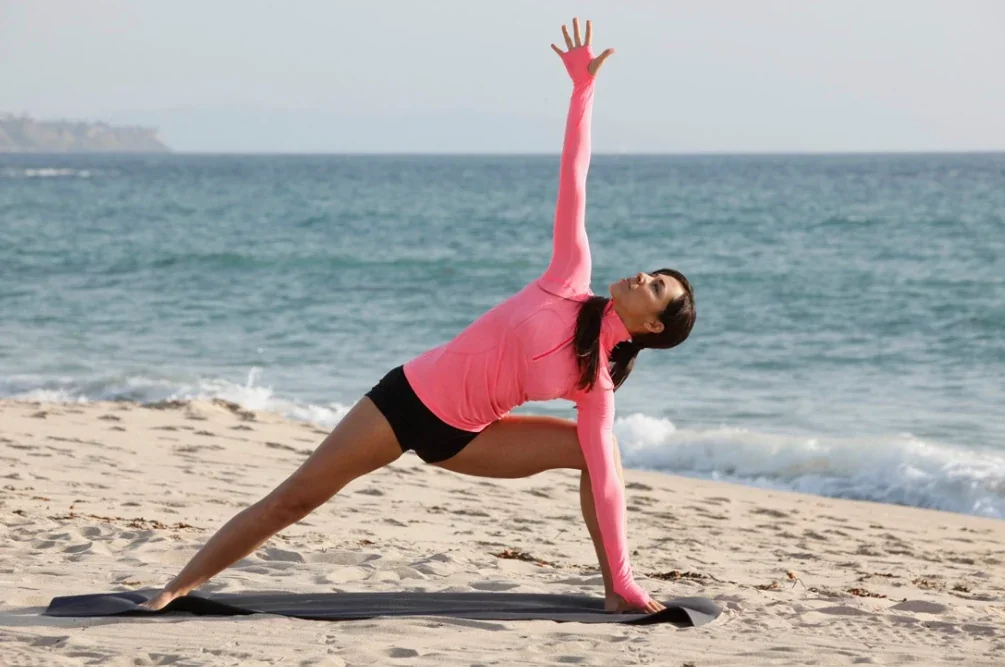
You don't need to build your entire vacation around jiu-jitsu to make time for it.
What you do need is a little research before you leave.
Start With Local Academies and Class Schedules
The simplest place to begin is with an online search.
Try combinations like:
Brazilian jiu-jitsu near your destination
BJJ drop-in classes in the city you're visiting
Gracie Jiu-Jitsu schools near your hotel
Family-friendly jiu-jitsu academies
BJJ open mat sessions for visitors
Google Maps can help you locate academies and estimate how far they are from your accommodations. From there, visit their websites and social media pages.
Look beyond the photos of people wearing gis.
Check the class schedule. Find out whether they offer beginner sessions, advanced training, or open mats. Read their visitor information, and pay attention to whether the gym seems like a place where you'd feel comfortable learning.
A beautiful facility means very little if the class doesn't fit your needs.
Explore the Gracie University Training Network.
Naturally, one place I would start is Gracie University.
The Certified Training Center directory lists authorized schools across six continents.
One especially useful benefit is available to active Certified Training Center students. Under the published CTC Family Membership policy, eligible students can visit participating Certified Training Centers, including headquarters, for free training for up to 30 consecutive days per year.
The official policy recommends contacting the location before visiting.
That matters because being part of a larger training community doesn't mean every class will be available at every hour.
You still need to find the right program, confirm the schedule, and introduce yourself.
Discover Academies Through BJJ Globetrotters
Another useful resource is BJJ Globetrotters, an international community that connects people who enjoy Brazilian jiu-jitsu and travel.
Its affiliated academies agree to welcome practitioners from different teams and backgrounds.
According to the organization's membership guidelines, traveling members can receive one week of free training at affiliated academies.
Membership is free, but it's still wise to contact the academy beforehand to confirm the current schedule and arrangements.
I love the idea behind this kind of community.
People don't have to share a hometown, a language, or a last name to share a love of learning.
Sometimes, what connects us is simply the willingness to step onto the same mat.
What to Ask Before Visiting a New Jiu-Jitsu Academy
Finding a school is only the first step.
Before adding a class to your itinerary, take a few minutes to find out how the academy welcomes visitors.
Can Visitors Join Classes or Open Mats?
Some gyms accept walk-ins. Others ask visitors to contact them first, book a class, or complete paperwork.
A good BJJ visitor etiquette guide recommends checking the academy's expectations before arriving.
I would keep the message simple:
"Hi! I'll be visiting your city and would love to train while I'm there. Do you welcome visiting students? Could you share your schedule, drop-in fees, and uniform requirements?"
You should also ask whether the class matches your experience level.
Being eager to learn is wonderful. Accidentally walking into a session you aren't prepared for is a different experience.
A quick conversation can save a lot of confusion.
Are There Classes for Adults and Children?
Traveling with children adds another layer of planning.
Before arranging a family training session, check whether the academy has age-appropriate programs.
For example, Gracie University Headquarters offers Gracie Bullyproof programs designed for children ages 3 to 12, with different groups based on age and readiness.
Not every academy offers the same programs.
Ask about age requirements, experience levels, supervision, and whether visiting children can participate.
And here's something I believe deeply as a mother: a child's comfort matters.
An unfamiliar classroom, new instructor, and different training partners can feel like a lot.
Give your children the chance to understand what they're walking into before expecting them to participate.
Confidence isn't something we demand from our kids. We help them build it.
What to Pack for Jiu-Jitsu While Traveling
Packing for a trip is already an exercise in making decisions.
Add children to the equation, and suddenly you're wondering how three days away requires enough belongings to furnish a small apartment.
The goal is to bring what you'll actually use.
Keep Your Training Bag Simple
Your packing list will depend on the type of training the academy offers.
For a GI class, consider bringing:
A clean gi and belt
A rash guard if required
Sandals for walking off the mat
A water bottle
Personal toiletries
A separate bag for used training clothes
For no-gi classes, ask about approved rash guards, shorts, and other uniform requirements.
Some academies have specific rules about colors, patches, and clothing.
Check before filling your suitcase.
If you're traveling light, it may be worth asking whether the academy has loaner uniforms. Don't assume they will.
And if you're planning several classes, consider how you'll wash your gear between sessions.
Clean Gear Matters Everywhere
This isn't the glamorous part of traveling, but it matters.
Brazilian jiu-jitsu involves close physical contact, so personal hygiene deserves attention.
The CDC's guidance for athletes recommends showering after exercise, washing and thoroughly drying training clothing after each use, and avoiding the sharing of towels and other personal items.
The guidance also warns athletes to watch for possible skin infections and seek medical advice when needed.
If you notice a suspicious skin infection, don't train until you've received appropriate medical guidance.
When traveling, I would plan for laundry access rather than leave damp gear sitting in a closed suitcase.
Nobody needs that souvenir.
Making Jiu-Jitsu Part of a Family Trip Without Making It the Whole Trip
I believe capability can be built.
In our bodies, in ourselves, in our children, and inside our homes.
Jiu-jitsu is one way to practice that belief. But it doesn't need to take over every family experience.
Find a Training Schedule That Works for Everyone
A family vacation isn't a training camp unless everyone has agreed that's what they're doing.
There may be museums to visit, beaches to explore, meals to enjoy, and children who need time to rest.
Instead of arranging every day around the nearest academy, look for a class that fits naturally into the trip.
Maybe that's an early session before the family starts exploring.
Maybe it's one afternoon while other family members enjoy something different.
Or maybe the available classes don't work with your schedule at all.
That doesn't mean the trip has failed some secret jiu-jitsu test.
As women and mothers, we can become very good at turning everything we love into another responsibility.
I know that pattern.
I don't want the things that bring us joy to become one more item on a list we're exhausted from completing.
Give Children Room to Enjoy the Experience
I've always believed children learn a great deal by watching the adults around them.
They watch us try. They watch us get frustrated. They watch what happens when something doesn't come easily.
A new jiu-jitsu environment can give a family another opportunity to talk about those experiences.
Before attending a class, explain to your child that the instructor may teach things differently and that it's okay to ask questions.
Let them know they can speak up if something feels uncomfortable.
And if they're not ready to join, listen.
The lesson doesn't always need to be about completing the class.
Sometimes it's about learning to recognize how you feel, communicating it clearly, and trusting that your voice matters.
Those are skills worth practicing well beyond childhood.
Leave Room for Life Outside the Academy
My life has taken me from professional dance to motherhood, writing children's books, and teaching women self-defense.
One thing those experiences have taught me is that we can love more than one part of our lives.
We don't need to make every moment productive.
Training might be something meaningful to include during a trip, but so is taking a walk with your family.
So is having a long lunch.
So is letting your children explore a place you've never seen before.
The mat will still be there when you return.
The version of your children you get to travel with today won't stay this age forever.
That perspective changes how I think about spending time.
How to Be a Respectful Guest at Any Jiu-Jitsu Academy
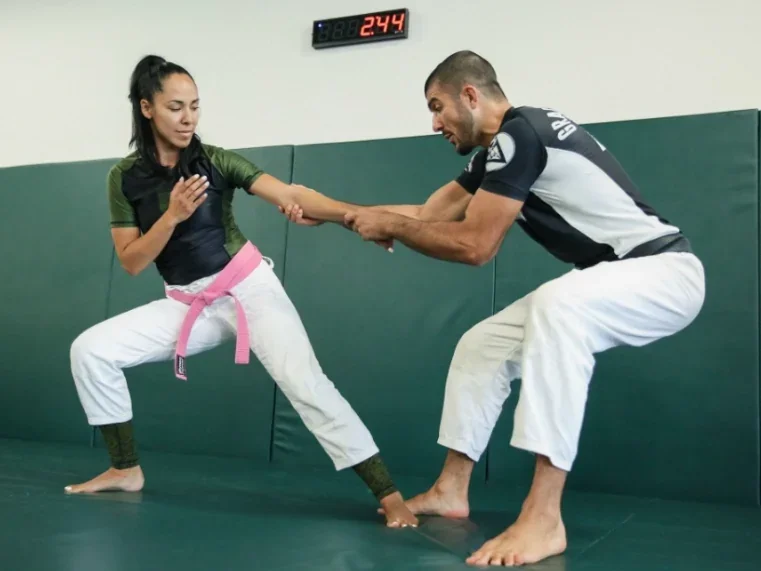
One of my favorite things about learning something new is remembering that I don't know everything.
Even after years of teaching, I still believe there's value in approaching a new room as a student.
Especially when you're visiting someone else's academy.
Learn the Academy's Rules Before Stepping on the Mat
Every academy has its own routines.
Some expect students to line up according to rank. Others have particular requirements for uniforms, footwear, greetings, or where belongings should be kept.
The visitor etiquette recommendations from DOJOTAP suggest arriving early, introducing yourself, respecting fees, and following the host academy's rules.
These are simple habits, but they make a difference.
I would also ask permission before taking photographs or recording videos.
A room full of people training together doesn't automatically mean everyone wants to appear on someone else's social media page.
Respect begins before the first technique.
Train Safely With People You Have Just Met
Your goal as a visitor doesn't need to be proving how much you know.
Tell the instructor about your experience.
If you have an injury or physical limitation, communicate that before participating.
When training with someone new, pay attention to your partner, agree on an appropriate pace, and respect the rules of that academy.
Tap when you need to. Release immediately when someone taps.
If you're unsure whether a particular technique is allowed, ask.
As someone who teaches self-defense, I care deeply about the distinction between knowing how to use your body and feeling the need to prove yourself with it.
There is strength in restraint.
You can train seriously, challenge yourself, and still be a thoughtful partner.
And when class ends, thank the people who shared their time and knowledge with you.
What Training in New Places Can Teach Us
Jiu-jitsu introduced me to a different relationship with movement.
Dance taught me how to perform with my body.
Jiu-jitsu taught me that my body was also something I could trust, develop, and defend.
That change didn't happen because I became perfect at every technique.
It happened through learning.
Different People, Different Ways of Learning
When you're used to training in one environment, you become familiar with how things are explained.
A visiting class may introduce a different teaching style, pace, or approach to a familiar movement.
That can feel uncomfortable.
But being a beginner at something, even when you have experience elsewhere, isn't a bad thing.
It's an invitation to pay attention.
You may leave with a useful technical detail. You may leave with a new question.
Both are worth something.
Building Confidence Through New Experiences
I often tell women that they are worth defending.
That belief is central to my work teaching Women Empowered at Gracie University.
But confidence isn't about walking into every situation knowing exactly what will happen.
To me, it's about developing enough trust in yourself to handle the moments when you don't.
Travel gives us plenty of those moments.
New surroundings. Unfamiliar routines. Different people.
A jiu-jitsu class is one possible place to practice meeting something unfamiliar with curiosity rather than fear.
Not because everything will go perfectly, but because we're willing to learn.
What If There Is No Jiu-Jitsu Academy Nearby?
Not every destination will have an academy that fits your schedule, experience, or family's needs.
That's okay.
You can use the time to rest, take a walk, stretch comfortably, or revisit familiar lessons through approved instructional materials.
Gracie University also provides eligible students with access to online training resources, which can be useful when attending a class isn't possible.
Just remember that reviewing a technique isn't the same as safely practicing it with a qualified partner.
And sometimes, the best decision is to put training aside and enjoy the place you've traveled so far to see.
Rest belongs in a healthy relationship with movement, too.