I have two daughters. They have big feelings. So do I.
I've spent years learning how to move my body, defend myself, teach other women, and raise children. I've performed on stages in front of thousands of people. I've also cried in my kitchen over a homeschool day that went completely sideways.
Guess which one taught me more about myself?
Motherhood has a way of introducing you to parts of yourself you thought you had already figured out.
You can love your children more than anything and still feel your patience slipping. You can understand the value of gentle communication and still hear your voice getting louder than you intended.
For a long time, I thought being a capable mother meant handling whatever came my way without letting anyone see how difficult it was.
I've learned something different.
A regulated mom isn't a mom who never loses her patience. She's a mom learning to recognize when she's overwhelmed, take responsibility for her reactions, and find her way back.
That understanding changed how I think about nervous system regulation for parents and how I think about the kind of mother I want to keep becoming.
What Is Nervous System Regulation for Parents?
Nervous system regulation is the ability to respond to stress, manage emotional and physical reactions, and recover after a difficult experience.
It doesn't mean eliminating anger, frustration, sadness, or fear.
It means developing the awareness and skills to experience those feelings without letting every emotional reaction make your decisions.
The National Institute of Mental Health explains that stress is a physical and mental response to demands and that understanding our triggers and practicing healthy coping skills can help us manage it.
For parents, this might look like recognizing that you're becoming frustrated before another request pushes you over the edge.
Or noticing that you're exhausted and need help instead of convincing yourself you should be able to handle one more thing.
What happens when your body reacts to stress?
Your body doesn't wait for you to decide whether something deserves a stress response.
You might notice your shoulders tightening, your breathing changing, your heart beating faster, or your thoughts racing.
The American Academy of Pediatrics describes similar physical changes when people experience anger, including a faster heartbeat and difficulty thinking clearly.
Now picture those reactions happening while you're trying to settle an argument between your kids, answer a work message, and figure out what everyone is eating for dinner.
Suddenly, your reaction makes a little more sense.
That doesn't mean every reaction is acceptable. It means understanding what's happening gives us a better chance of responding differently.
Why regulation doesn't mean staying calm
I don't want my daughters growing up believing that strong women never get angry.
I want them to understand that feelings are information. They tell us something about what we're experiencing, what matters to us, and sometimes what needs to change.
Being regulated doesn't require a peaceful expression and a perfectly gentle voice every hour of the day.
It means learning to notice our reactions, make safer choices, and return to a steadier place.
And sometimes, it means admitting we didn't handle something well.

What a Regulated Mom Actually Looks Like in Real Life
If you're imagining a mother who speaks softly, maintains a beautiful morning routine, and never gets irritated by the fifth interruption, I'd like to introduce you to actual children.
They have their own ideas about how the day should go.
And so do we.
She gets frustrated but notices what's happening.
A regulated mom can be irritated.
She can feel disappointed when plans fall apart. She can want five minutes alone without someone asking where their shoes are.
The difference is that she's practicing awareness.
Instead of immediately reacting, she might recognize, "I'm exhausted, and everything feels louder than it actually is."
That small moment of awareness gives her another choice.
She pauses when she needs to.
Sometimes the most useful thing a mother can say is, "I need a minute."
Not as punishment. Not to make her children responsible for her feelings.
Simply because she recognizes that continuing the conversation in that moment might make things worse.
The American Academy of Pediatrics recommends that parents take a brief break when they feel out of control, provided their child is safe, and return when they are ready.
I love that this advice makes room for being human.
She holds boundaries without denying feelings.
As a self-defense instructor, I spend a lot of time teaching women that boundaries matter.
Motherhood hasn't changed that belief.
Your child can be upset about a boundary, and the boundary can still stand.
You can acknowledge disappointment without changing your answer simply to avoid an uncomfortable moment.
A child might not like being told that screen time is finished. They can be upset about it. You can listen to their frustration while keeping the limit.
Both things can exist together.
She admits when she gets it wrong.
This might be the most meaningful part.
A regulated mother isn't above apologizing to her children.
She understands that being the adult doesn't mean being right simply because she's older.
When she reacts poorly, she can acknowledge it, apologize, and try again.
That's not giving up her authority.
It's using it responsibly.
Why Moms Feel Overwhelmed Even When Everything Looks Handled
Some women are incredibly good at looking capable.
They manage the schedules, remember the appointments, keep track of the groceries, organize family gatherings, and somehow know exactly where everyone left their belongings.
From the outside, it looks handled.
And technically, it is.
But handling everything isn't the same as feeling supported.
I've spent a lot of my life performing. Onstage, professionally, and sometimes in everyday roles where I believed I needed to become whoever the situation required.
Motherhood can invite that same performance.
You become the woman who can always figure it out.
Then, slowly, everyone gets used to you figuring it out.
The hidden weight of carrying everyone's needs
In the U.S., according to the Surgeon General's 2024 Parents Under Pressure advisory, 48% of parents reported that their stress felt completely overwhelming on most days, compared with 26% of other adults, based on 2023 data.
Those numbers deserve attention.
Parenting asks a great deal of people, often while they're managing work, finances, relationships, and their own well-being.
The answer cannot always be another productivity system or a better morning routine.
Sometimes the answer is that one person needs to stop carrying the entire household.
Being capable doesn't mean doing everything yourself.
One of the beliefs behind my work is that capability can be built.
In our bodies. In ourselves. In our children. In our homes.
But there's an important distinction.
I don't want to become so capable that nobody else gets the opportunity to grow.
When children take on age-appropriate responsibilities, when partners share the work, and when mothers allow themselves to ask for help, responsibility can become something a family shares.
I want a family where everyone learns they can contribute.
Not one that depends on a single exhausted woman.
How to Regulate Your Nervous System When Parenting Feels Like Too Much
I wish there were one practice that worked for every mother, every child, and every difficult Tuesday.
There isn't.
But there are ways to build awareness and give yourself more room between feeling something and acting on it.
1. Learn to recognize your early warning signs
Before you reach the point of yelling, what happens?
Does your jaw tighten? Do small requests suddenly feel enormous? Do you find yourself rushing through everything?
Try noticing the first signs of frustration rather than waiting until you've reached your limit.
You might ask yourself:
What am I feeling right now?
What is happening in my body?
What do I actually need before I respond?
You don't need perfect answers.
You need a place to begin.
2. Give yourself permission to pause.
You don't have to solve every disagreement the second it happens.
If your child is safe, you can take a short pause before continuing.
You might say, "I'm frustrated, and I want to talk about this when I can listen properly."
The American Academy of Pediatrics recommends grounding practices such as noticing your feet on the floor and paying attention to your surroundings when emotions run high.
The point isn't to escape the conversation.
It's to return to it with more intention.
3. Move your body.
Movement has been part of my life for as long as I can remember.
Dance taught me discipline and expression. Jiu-jitsu taught me something else: how to work through challenging physical situations while learning what my body can do.
I believe there's value in getting out of our heads and paying attention to the bodies we live in.
The National Institute of Mental Health recommends regular physical activity as one way to support mental well-being.
That doesn't mean you need a full workout every time parenting gets difficult.
You might take a short walk, stretch, dance in the kitchen, or spend a few minutes outside.
Find movement you enjoy and can realistically return to.
4. Stop treating rest like something you have to earn.
This one can be uncomfortable for capable women.
We're often quick to identify what everyone else needs and remarkably talented at explaining why our own needs can wait.
But constantly ignoring exhaustion isn't a badge of honor.
Sleep, relaxation, supportive relationships, and realistic expectations are all included in NIMH's recommendations for caring for mental health.
Rest doesn't need to be a reward for finishing everything.
And asking for support doesn't mean you've failed.
If you're experiencing persistent distress, severe symptoms, or reactions that interfere with daily life, talking with a qualified health professional is another meaningful step. You don't have to solve everything through personal practices alone.
What to Do After You Lose Your Patience With Your Child
Let's talk about the moment after.
The argument has happened.
Your voice was louder than you wanted. Your child is upset. You're upset.
And now you're sitting with that uncomfortable feeling that you could have handled things differently.
I know what it's like to get through a difficult parenting day and wonder what I could have done better.
Here's what I want to remember in those moments.
Getting something wrong doesn't eliminate our ability to make a better choice next.
Recognize what happened without making excuses
There's a difference between explaining why you felt overwhelmed and making your child responsible for your reaction.
"I was tired" might be true.
"You made me yell because you wouldn't listen" places the responsibility somewhere it doesn't belong.
We can acknowledge the circumstances and still own our behavior.
Apologize in words your child understands.
A repair conversation doesn't need a speech worthy of an awards ceremony.
It can be simple.
"I'm sorry I raised my voice. I was frustrated, but yelling wasn't the way I wanted to handle that."
Or, "I still need you to follow that rule, but I should have spoken to you differently."
The American Academy of Pediatrics encourages parents to model meaningful apologies that acknowledge what happened rather than simply saying sorry.
Your child doesn't have to immediately feel better because you've apologized.
Give them room to respond.
Reconnect and practice something different.
An apology matters, but our next actions matter too.
Maybe you recognize that mornings need more preparation.
Maybe a certain conversation needs to happen when everyone is rested.
Maybe you need another adult to share a responsibility that has become too much.
Whatever the lesson, repair gives you a chance to put it into practice.
It also isn't permission to repeat hurtful behavior without changing it. If yelling or frightening reactions become frequent, seeking additional support matters.
What Children Learn When They See Their Mom Handle Big Feelings
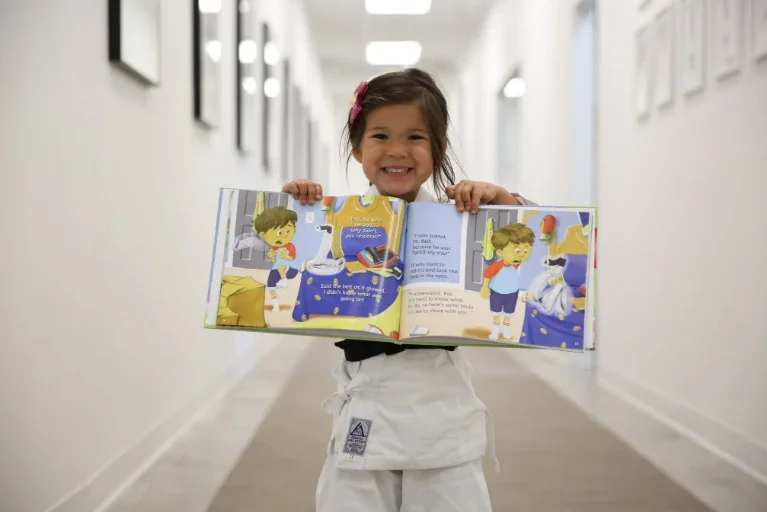
I wrote Kalyn Finds Her Power because I wanted children to understand that they don't have to run away from their emotions to become strong.
In the story, Kalyn experiences difficult feelings and learns to find her voice.
I believe adults need that reminder too.
We don't have to pretend we're never angry, disappointed, or afraid.
We do have to take responsibility for what we do with those feelings.
Our children are watching how we respond.
Children learn a great deal through everyday interactions.
The Harvard Center on the Developing Child explains how responsive exchanges between children and caring adults support early social and emotional development.
And the American Academy of Pediatrics encourages parents to model the communication they want their children to learn.
When we name our feelings, listen to theirs, or admit a mistake, we're giving children real examples of how to handle challenging moments.
Connection doesn't require agreement.
One lesson I hope my daughters carry into adulthood is that they can disagree with someone they love without losing themselves.
They can have boundaries.
They can speak up.
They can make mistakes and take responsibility.
And they can learn that a difficult conversation doesn't always have to become a broken relationship.
Those are skills worth practicing together.
You Can Be a Good Mom and Still Be Learning
I spent fifteen years performing professionally, and I've spent plenty of time learning what it means to stop performing in my own life.
Confidence never came from getting every move right.
It came from practicing, failing, learning, and realizing I could handle more than I once believed.
Motherhood keeps teaching me that lesson in new ways.
Some days I get it right.
Some days I need to apologize.
Some days the bravest thing I do is admit that I need help.
I no longer want to measure my motherhood by how well I appear to have everything under control.
I want to look at how I respond when things don't go according to plan.
A regulated mom isn't always calm. She's willing to learn how to return to herself, take responsibility, and reconnect.
And tomorrow, she gets another chance to practice.
If this speaks to the season of motherhood you're in, I'd love for you to explore more of my writing about capability, boundaries, and becoming the woman you want to be.
Visit Victoria Gracie to read more about my work and the lessons I'm still learning, or get in touch with me to connect.
You don't have to get everything right to keep growing.
Frequently Asked Questions
1. What does nervous system regulation mean for parents?
Nervous system regulation for parents means managing physical and emotional responses to stress and learning to recover after challenging moments. It doesn't require parents to feel calm constantly. The National Institute of Mental Health recommends understanding personal stress triggers and developing healthy coping practices.
2. How do I know if my nervous system is dysregulated?
You might notice feeling unusually irritable, tense, restless, overwhelmed, or unable to settle after stressful situations. These experiences can have several causes and aren't enough to diagnose a nervous system condition. The NIMH stress guide recommends seeking professional help when stress feels constant or interferes with everyday life.
3. Can I be a regulated mom and still get angry?
Yes. Anger is a normal human emotion, and regulation doesn't mean preventing yourself from experiencing it. The goal is to recognize the feeling and choose a response that doesn't harm yourself or others. The American Academy of Pediatrics encourages naming angry feelings and finding constructive ways to respond.
4. What should I do if I yell at my child?
Once you're calm enough to talk, acknowledge what happened, apologize without blaming your child, and explain how you plan to respond differently. Listen to their feelings and allow time for reconnection. The American Academy of Pediatrics recommends that parents learn from their mistakes and model how to recover after reacting poorly.
5. How can I teach my child emotional regulation when I struggle with it myself?
Start by practicing alongside your child rather than expecting yourself to have mastered every skill. You can name feelings, pause when overwhelmed, and demonstrate how to try again after making a mistake. The Harvard Center on the Developing Child explains that responsive relationships and support for adult self-regulation help create healthier environments for children to develop their own skills.